Monday, 15 April 2013

Sunday, 14 April 2013
Wednesday, 27 March 2013
Tuesday, 26 March 2013
Improving My Editing Ability!
 |
| Using The Adobe Editing Software |
 |
| Adobe Premiere Pro |
My own personal target of late in our media lessons has been to work on my editing skills. Therefore, I've taken it upon myself to put myself forward to participate in editing recently, inserting the footage we filmed recently at Jacob's house. Theres certainly an emphasis on teamwork within our group: as you will have read in my last post, Adobe Premiere Pro isn't my favoured editing software, but Melissa has been able to help me out with any qualms I've had with the software and so in this sense, I feel as though with this help I've been able to improve my editng ability. Having said that, none of us have had any prior experience to the Adobe Premiere Pro; in fact, we have faced difficulties at some points with intercutting footage, and reducing the diegetic volume on our footage. However, with the assistance of our teachers (and the ever-helpful internet), I feel as though we are getting closer to a product we are happy with. This work has truly made me a more enlightened editor, and this practice will make me more confident, not only with the work we're currently doing, but with my studies in the future.
Thursday, 21 March 2013
Creating My Own Short Film...
As an aside to my work on the thriller opening, I've been working on something by myself to build on my film-making skills. This all came about from a recent short-film competition that was run by the school and, although this was separate to my work on our group's thriller, I saw this as an opportunity to learn more audiences, conventions of genre and how to construct meaning through editing, mise-en-scene, camera and sound. In other words, I felt this project would help me to develop a more comprehensive understanding of film-making, and whereas I could afford to be more reliant on other group members on the more technical aspects of things such as editing (perhaps my weakest skill), this would give me the chance to practice these things on my own, independently, without help. And, actually, I felt this work could reinforce everything that I've learnt in the past year about media and film-making. Therefore, I began to set about making my own short-film....
I knew from the off-set that I wanted to produce something entirely different to the thriller genre. I came to this decision purely because I felt I could challenge myself by approaching something new. Again, the genre would be fresh, which meant I could adapt my understanding of film-making from my Media Studies lessons. Actually, I decided on a genre that isn't actually what I would call a cinematic genre; recently on Youtube there has been a craze (no, not the Harlem Shake) known as Document Your Life. Youtubers upload these clips each month, and although the style of these video's can afford to differentiate from one another from person to person, I understood that there were a few conventions to these video's:-
a) The music would have an ethereal, relaxing tone. Non-diegetic sound is often more prominent than actual diegetic sound in order to create a more atmospheric tone.
b) In terms of mise-en-scene, video's can contain anything: it's very much free and creative in the sense that the video should literally document what's going on in your day. However, the video's are very stylised and have quite an exaggerated, dream-like style. Therefore, there should be vibrant colours and video's could feature objects that have connotations of happiness and peace.
c) Shots are often close-up to give the audience more of a connection to the action on screen. Again,panning and transitions are all acceptable but the film should feel naturalistic and minimalist in it's style. Out of focus shots and shots that don't use tripods again give it a more naturalistic, atmospheric tone.
d) Editing isn't too fancy; action isn't very fast-paced so there aren't a lot of quick cuts.
Having established the conventions of this internet-based genre, I set about filming this project. I used a Canon camera in order to capture high definition shots, which could also provide shots that could be out-of-focus and generally more artistic. The following is the short that I made:
I knew from the off-set that I wanted to produce something entirely different to the thriller genre. I came to this decision purely because I felt I could challenge myself by approaching something new. Again, the genre would be fresh, which meant I could adapt my understanding of film-making from my Media Studies lessons. Actually, I decided on a genre that isn't actually what I would call a cinematic genre; recently on Youtube there has been a craze (no, not the Harlem Shake) known as Document Your Life. Youtubers upload these clips each month, and although the style of these video's can afford to differentiate from one another from person to person, I understood that there were a few conventions to these video's:-
a) The music would have an ethereal, relaxing tone. Non-diegetic sound is often more prominent than actual diegetic sound in order to create a more atmospheric tone.
b) In terms of mise-en-scene, video's can contain anything: it's very much free and creative in the sense that the video should literally document what's going on in your day. However, the video's are very stylised and have quite an exaggerated, dream-like style. Therefore, there should be vibrant colours and video's could feature objects that have connotations of happiness and peace.
c) Shots are often close-up to give the audience more of a connection to the action on screen. Again,panning and transitions are all acceptable but the film should feel naturalistic and minimalist in it's style. Out of focus shots and shots that don't use tripods again give it a more naturalistic, atmospheric tone.
d) Editing isn't too fancy; action isn't very fast-paced so there aren't a lot of quick cuts.
Having established the conventions of this internet-based genre, I set about filming this project. I used a Canon camera in order to capture high definition shots, which could also provide shots that could be out-of-focus and generally more artistic. The following is the short that I made:
To edit this I used the 'iMovie' software that's typically found on all Macs. Again, this was slightly different to my work on thrillers (we're editing that using AdobePremierePro) and I did this purposely because I'm not much of a fan of Adobe's software- I thought my inability to edit came as a result of me not being too tech-savvy, but I found the iMovie editing process to be a lot easier and self-explanatory than using the aforementioned editing software, so perhaps it's just a matter of personal taste.
The chance to practice editing was invaluable really to my learning. The past few weeks, I've been assigned the task of scouring the lowly depths of copyright-free-music websites for my thriller work and whilst I was okay with that job, I suddenly realised that everyone else in the group had massively improved their editing skills and I uh, well... didn't have a clue. And so this task really forced me to get to grips with editing clips, putting in transitions, adding text over the top as well as adding non-diegetic audio clips. Following this, I now feel more equipped to tackle the technical aspects of editing software.
To wrap up the other things that I considered when making this video, I used naturalistic lighting to further reinforce the authenticity of the piece. Moreover, there's actually only one effect in the video, just the one transition at the end, and again I felt this made my short feel more real, and feel like more of an intimate insight. None of the action was storyboarded, and it was completely improvised, amassing around an hours worth of footage by keeping the camera rolling; this ensured that I could select the best shots and not have worry about falling short on the running length (something that I think has troubled our group as we stick to quite a rigid, structured storyboard and suddenly realise that our timings were off). Having said that, there wasn't much structure or much of a narrative to this video but even so, I think I've learnt my lessons about the con's of placing too much significance on storyboarding over the past few weeks.
In summation, I feel like I've had a real learning curve through the process of creating my own short film. I've felt as though I've learnt about the technical aspects of editing that have given me more confidence when approaching the dreaded AdobePremierePro when editing our thriller. Also, I have been able to build upon my understanding of genres, institutions and conventions which will not only help me as exam practice, but will give me more of an understanding when it comes to writing an evaluation for our thriller. And finally, it was great to try and test myself independently, to see where I was in terms of my ability and to see what I needed to improve upon. Therefore, this task was invaluable to giving me a more comprehensive understanding of film-making and what that entails..
Thursday, 14 March 2013
Shoot #4: Thursday 7th March
Last week, our group scheduled another reshoot in order to finish off the scene's that were due to be shot in [group member] Jacob Smith's house. Unfortunately, I had to pull out at the last minute, which was unfortanate and, to an extent, frustrating because of the fact that I needed to bring an important prop to the shoot (the briefcase, to be precise). In spite of this, I received feedback from Melissa that they had shot most of the footage that was needed and that the shoot was largely successful, minus the shots that required the briefcase. Despite the inconvenience of not being able to be there, I'm happy with the work our group is doing and I'm confident that we're on track with our work. At some point in the next few days, we'll have to another (quick) reshoot before our filming will be complete. Hopefully once those scenes are shot, we'll be able to have the raw footage that, edited together, will make for an exciting thriller opening...
Tuesday, 12 March 2013
Learning the Basics #2: Lighting
Welcome to another edition of 'Learning the Basics', where I endeavour to get my head around the technical aspects of aspects of film-making, so that I can apply this knowledge to our groups thriller-opening work. And so todays topic is lighting. Lighting is of fundamental importance; it can create and reflect the mood and atmosphere of a scene. In this respect,the use of lighting acts as a means of pathetic fallacy and, in terms of thrillers, can build and create suspense. However, the main purpose of lighting (irrespective of genres etc.) is to draw the audiences attention to a specific area or character. There are several types of lighting that are used in the film-making industry:-
Key Light:- Most often the brightest light, key lighting is most significant in capturing the important parts of the frame (e.g. a characters face). Moreover, the sole use of key lighting can create contrast within a scene, which would be apt in order to create a dark, menacing tone within our opening. Back
Light:- Typically used to eliminate the dominance of the key light.
Filler Light:- Said light is used to soften shadows created from the other lights, making the scene look more realistic and authentic.
Lighting angles are also commonplace within film as well; they include:
Back Lighting:- Light source is placed behind the subject within the frame; this form of lighting is popular within the thriller genre as it can be used effectively to create shadows or silhouettes.
Top Lighting:- When the main source of light is place above the subjuect; this form of lighting can be typically found in the Hollywood classics era to give stars a more glamorous look.
Under Lighting:- The source of light is placed beneath the subject; can create a sense of dominance. Moroever, it can create shadows and a creepy atmosphere, and is often seen in horror or slasher films.
I also want to touch upon the importance of low-key lighting within the thriller genre. Such lighting is created by the use of back lights, and creates sharp contrast, along with shadows and silhouettes. This is form of lighting can be used to construct a darker, moodier atmosphere which lends itself really well to the thriller genre. I learnt about low-key lighting in this effective and concise video:
In summation, my research on lighting has allowed me to consider the importance of technical aspects in order to construct appropriate meaning. If we were to use low-key lighting, our opening would be able to conform more to the thriller genre, and- along with other factors such as sound, camera and mise-en-scene- would create a more effective thriller opening that should, hopefully, get us a better grade...
 |
| Lighting in Film (Diagram) |
Key Light:- Most often the brightest light, key lighting is most significant in capturing the important parts of the frame (e.g. a characters face). Moreover, the sole use of key lighting can create contrast within a scene, which would be apt in order to create a dark, menacing tone within our opening. Back
Light:- Typically used to eliminate the dominance of the key light.
Filler Light:- Said light is used to soften shadows created from the other lights, making the scene look more realistic and authentic.
Lighting angles are also commonplace within film as well; they include:
Back Lighting:- Light source is placed behind the subject within the frame; this form of lighting is popular within the thriller genre as it can be used effectively to create shadows or silhouettes.
Top Lighting:- When the main source of light is place above the subjuect; this form of lighting can be typically found in the Hollywood classics era to give stars a more glamorous look.
Under Lighting:- The source of light is placed beneath the subject; can create a sense of dominance. Moroever, it can create shadows and a creepy atmosphere, and is often seen in horror or slasher films.
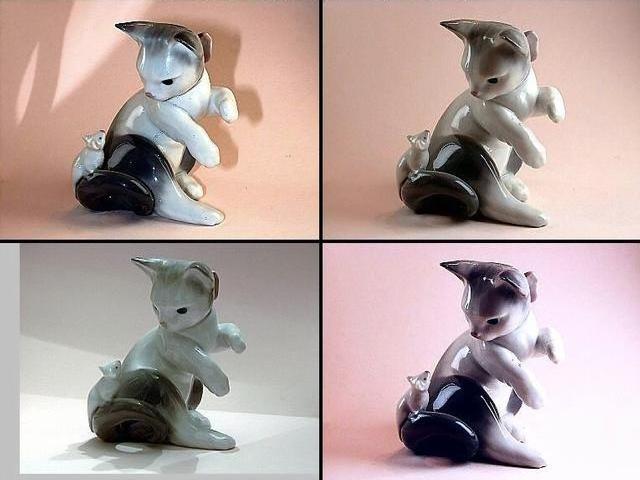 |
| Same camera angle, but different lighting (which can affect the tone of the piece massively) |
I also want to touch upon the importance of low-key lighting within the thriller genre. Such lighting is created by the use of back lights, and creates sharp contrast, along with shadows and silhouettes. This is form of lighting can be used to construct a darker, moodier atmosphere which lends itself really well to the thriller genre. I learnt about low-key lighting in this effective and concise video:
In summation, my research on lighting has allowed me to consider the importance of technical aspects in order to construct appropriate meaning. If we were to use low-key lighting, our opening would be able to conform more to the thriller genre, and- along with other factors such as sound, camera and mise-en-scene- would create a more effective thriller opening that should, hopefully, get us a better grade...
Thursday, 7 March 2013
And Another Storyboard!
Prior to our shoot in London, several things had happened. Namely, our first rough cut was peer assessed, and it became increasingly apparent that what we had created was not to a high enough standard. Heads had been cut out of shots, lighting was too dark, panning shots weren't smooth and, well, it just wasn't good. It was that assessment that we did as a class that put into practice the whole process of the London shoot.
The idea of shooting in London changed the narrative in a drastic way- suddenly, this idea of our protagonist planning his crazed plans outside the Houses of Parliament was becoming the main arrative drive of out opening. And so, we figured that we needed to start from scratch, go back to the drawing board so to speak, and attempt to make saomething that was more effective as an opening.
Since then, we've been able create a much more effective opening (which you can see in previous posts), but I'd like to share with you, reader, the storyboards that formulated that footage. We decided to shoot:
''-Callum on the train looking impatient/agitated.
-Callum amongst a crowd just walking.
-Establishing shot of Callum smirking and gritting his teeth with the The Houses Of Parliment behind him.-Iconic buildings of London.''
This group discussion then formed the basis for the creation of our new and revised storyboard:


The idea of shooting in London changed the narrative in a drastic way- suddenly, this idea of our protagonist planning his crazed plans outside the Houses of Parliament was becoming the main arrative drive of out opening. And so, we figured that we needed to start from scratch, go back to the drawing board so to speak, and attempt to make saomething that was more effective as an opening.
Since then, we've been able create a much more effective opening (which you can see in previous posts), but I'd like to share with you, reader, the storyboards that formulated that footage. We decided to shoot:
''-Callum on the train looking impatient/agitated.
-Callum amongst a crowd just walking.
-Establishing shot of Callum smirking and gritting his teeth with the The Houses Of Parliment behind him.-Iconic buildings of London.''
This group discussion then formed the basis for the creation of our new and revised storyboard:


 |
| Our Storyboard! |
This storyboard is certainly an improvement on our previous cut. Whilst we've already shot the London parts of the storyboard,we've yet to shoot the scenes from within the protagonists' home. However, with this storyboard completed, I feel confident that we can construct an opening that is effective and engaging...
Another Questionnaire!
 |
| Developing A Survey... |
The purpose of this questionnaire is to find out whether we'd achieved what we'd set out to do, as well as getting feedback from an outsiders perspective (ie. someone whom can appreciate the two minutes as an actual 'audience-member', the people who this thriller opening was designed and created for). Moreover, I think it's important to make an evaluation that is comprehensive in terms of its content. I aim to evaluate:
a) myself as an individual within the group- my role within the group and my contribution to the production.
b) A group evaluation- we could create a podcast as a group discussing our thoughts and opinions in regards to our group's productiveness.
c) And, finally, to evaluate the feedback given from our target audience, how they responded to our thriller opening, and to figure out whether we were successful in terms of making an opening that fulfilled the expectations of out target audience...
... Which is where our questionnaire comes in! We've worked as a group to come up with questions that should hopefully provide interesting and insightful answers. Below is a 1st draft of survey questions:
1. From our opening sequence, does it make you want to watch the rest of the film?
2. Does the opening title sequence make sense?
3. Do the camera angles work and do they create realism?
4. Are the transitions smooth?
5. Is the sound track suitable?
6. Does it have thriller elements within?
7. Is the storyline presented well?
8. Is the lighting contributing to the suspense and ambiguity?
9. Are the props in the film realistic?
10. Did the characters work well within the opening of the film?
11. Is the whole production easy to understand, or is it complex?
12. Do you think the locations chosen are suitable within the opening title sequence?
13. Are the titles easy to read and do they last for a long enough amount of time?
As I've said, this is very much a first draft; this means that, as our re-shoots and editing come to an end, we should constantly be looking for other questions to make our questionnaire more effective as a source of evaluation. Hopefully, in the coming weeks, we'll find that this questionnaire will help or group to formulate ideas on whether we have created an effective opening to a thriller...
Monday, 4 March 2013
Magazine Research
So, we've been analysing magazines recently- the object of this research was to establish audience institutions and target audiences. All very relevant to our 'thriller opening' work, in the sense that it helped us to build skills in how to establish a specific audience and how to conform to the expectations of that audience. As a class, we discussed and analysed our research in order to collectively create a mindmap, which can be found below...
This research was a comprehensive analysis of the magazine industry in the year of 2013 (as I've discovered, media is an ever-changing part of society that is constantly evolving). The task allowed me to broaden my knowledge of the magazine industry, including new vocabulary:- Synergy: The coming together of many parts to form a stronger whole.
Convergence: The coming together of two or more media (e.g. smart phones, www).
This new vocabulary develops my understanding media as a whole, and the business aspects of media that are fundamental to the industry, such as expansion, NMT's and Intertextuality.
Then, we went into further depth and we were each assigned a magazine to research in further depth. I was give women's glossy Cosmopolitan UK, a magazine that, admittedly, wouldn't otherwise catch in my eye. In other words, I was an outsider looking in on an incredibly popular magazine, and it was my job to understand, quintessentially, why this magazine was so popular and how it's grown into such a phenomenon. This was designed in order to help me understand genre, target audience, as well as how NMT's have affected the brand, and how Cosmo has expanded into the brand it has become. And, most importantly, I would be learning about these things within a specific case study, rather than being generalised.
And so here was the presentation I gathered from my research:-
The point of this presentation was to build up an understanding of a specific magazine. Presenting our work in small groups meant that we could expand our knowledge and apply that to various other publications. And so, in an exam, I can refer to these case studies with a more comprehensive understanding of the magazine industry. Also, I would find whilst doing this presentation that the same question kept popping into my head: how does this apply to our coursework? This work truly was relevant to our coursework. A large part of that coursework is evaluating and reflecting upon how your two minutes is able to fulfil the expectations of a target audience. Whilst Cosmo may use pink fonts and colours to convey a sense of girliness and femininity, how is our choice of lighting, sound, mise-en-scene being used to construct a meaning for our target audience? And so this research task, albeit in a different area of media (magazines as opposed to films), I found this task massively helpful to my understanding of genres, conventions and target audiences...
 |
| Developing a Mindmap as a Class! |
This research was a comprehensive analysis of the magazine industry in the year of 2013 (as I've discovered, media is an ever-changing part of society that is constantly evolving). The task allowed me to broaden my knowledge of the magazine industry, including new vocabulary:- Synergy: The coming together of many parts to form a stronger whole.
Convergence: The coming together of two or more media (e.g. smart phones, www).
This new vocabulary develops my understanding media as a whole, and the business aspects of media that are fundamental to the industry, such as expansion, NMT's and Intertextuality.
Then, we went into further depth and we were each assigned a magazine to research in further depth. I was give women's glossy Cosmopolitan UK, a magazine that, admittedly, wouldn't otherwise catch in my eye. In other words, I was an outsider looking in on an incredibly popular magazine, and it was my job to understand, quintessentially, why this magazine was so popular and how it's grown into such a phenomenon. This was designed in order to help me understand genre, target audience, as well as how NMT's have affected the brand, and how Cosmo has expanded into the brand it has become. And, most importantly, I would be learning about these things within a specific case study, rather than being generalised.
And so here was the presentation I gathered from my research:-
The point of this presentation was to build up an understanding of a specific magazine. Presenting our work in small groups meant that we could expand our knowledge and apply that to various other publications. And so, in an exam, I can refer to these case studies with a more comprehensive understanding of the magazine industry. Also, I would find whilst doing this presentation that the same question kept popping into my head: how does this apply to our coursework? This work truly was relevant to our coursework. A large part of that coursework is evaluating and reflecting upon how your two minutes is able to fulfil the expectations of a target audience. Whilst Cosmo may use pink fonts and colours to convey a sense of girliness and femininity, how is our choice of lighting, sound, mise-en-scene being used to construct a meaning for our target audience? And so this research task, albeit in a different area of media (magazines as opposed to films), I found this task massively helpful to my understanding of genres, conventions and target audiences...
Sunday, 17 February 2013
Analysis Of The Shoot!
So it was back to the drawing board in terms of our thriller opening; admittedly, our first cut wasn't of a quality that reflected our ability as a group, and so therefore we took the decision to scrap all the work we've done prior to now. A bold move, I guess, but a necessary one.
On the 14th, my group colleagues Melissa and Jacob took a trip to London with our pshycho teacher (played by Callum), in order to shoot one of the parts of our two minutes. The scenes they filmed occured once our teacher has left his house, spying on the Prime Minister whilst looking menacing. The following is a rough cut of the footage they shot:-
And below are some of the behind-the-scenes pictures that they took whilst in London:-


Having spoken with Melissa afterwards, it became clear that whilst some things went well, there were parts that weren't so great. It was good in the sense that everything that we storyboarded was shot; also, we shot more than we needed to as opposed to not having enough footage, which means we can fulfil the criteria of the task by having an opening that is actually two minutes long. Well, it will be ince we've added the scenes from when our teacher is in his home.
However, we acknowledged that something that was bad was the fact that shots from up close to the Houses of Parliament couldn't be achieved. Therefore, Melissa and co. had to make up ideas on the spot, which was something that we promised to ourselves that we wouldn't do.
I'm happy with the results we've got from London and I think the likelihood is that we'll be using most of the above footage in our final cut. It's not perfect: I think the editing could have been a bit sharper, but again it's just another stepping stone in the learning process. Therefore, we may decide to reshoot small parts, but ultimately I'm pleased with the work we've put in and the enthusiasm our group has to make something that we can be proud of.
On the 14th, my group colleagues Melissa and Jacob took a trip to London with our pshycho teacher (played by Callum), in order to shoot one of the parts of our two minutes. The scenes they filmed occured once our teacher has left his house, spying on the Prime Minister whilst looking menacing. The following is a rough cut of the footage they shot:-
And below are some of the behind-the-scenes pictures that they took whilst in London:-


Having spoken with Melissa afterwards, it became clear that whilst some things went well, there were parts that weren't so great. It was good in the sense that everything that we storyboarded was shot; also, we shot more than we needed to as opposed to not having enough footage, which means we can fulfil the criteria of the task by having an opening that is actually two minutes long. Well, it will be ince we've added the scenes from when our teacher is in his home.
However, we acknowledged that something that was bad was the fact that shots from up close to the Houses of Parliament couldn't be achieved. Therefore, Melissa and co. had to make up ideas on the spot, which was something that we promised to ourselves that we wouldn't do.
I'm happy with the results we've got from London and I think the likelihood is that we'll be using most of the above footage in our final cut. It's not perfect: I think the editing could have been a bit sharper, but again it's just another stepping stone in the learning process. Therefore, we may decide to reshoot small parts, but ultimately I'm pleased with the work we've put in and the enthusiasm our group has to make something that we can be proud of.
Our New 'Rough Cut'...
Below is our new rough cut that we produced recently; evidently, theres a lot of work that needs to be done and the non-diegetic music needs to be found and edited ove the top of the footage. Moreover, we need to shoot the scenes at the beginning to fill our two minutes and meet the criteria of the task. With half-term underway, we're looking to get those scenes shot, ready to edit the following week so that we can meet the interim deadline of March 1st. Hope you enjoy:-
Monday, 11 February 2013
Continuity Task: Filming And Editing
The continuity task has been on my mind recently; I wasn't exactly proud of our final cut (I get that it's a practice, but even so) but it was what any practice should be: a learning curve. We can promise ourselves to build upon our mistakes but, having done our first shoot of our final piece, I don't know if we have. Admittedly, although I've held off an evaluation until now, and I probably should have done this a while ago, I actually think an evaluation now is more relevant to my learning than an evaluation back then: What were the mistakes we made back then? Have we continued to make these mistakes in our final piece? Hindsight is an good thing, and reflection is an important component to improvement... And so, with that in mind, take a look at our final piece.
Looking back on this, I have to say I think we have improved; the continuity task was essentially a chance for our teachers to assess our ability at that stage, but really it gave us as a group a chance to work out our working style as a group: who was the leader, who worked well with the camera etc. This was invaluable practice for us as a group, and meant that going into our first cut we had a clear idea of our roles and responsibilities within the group dynamic.
One thing that I realised was that we would often divert from the storyboard; although storyboarding can make the process of filming quite tedious, a storyboard should give the filmmaker confidence in what they're going to shoot. Often we found that our ideas at the storyboard process were too ambitious, and so we'd often have to come up with fresh ideas whilst filming, which, well, wasn't ideal. And because we diverted from our storyboard, our timing was off by quite some distsance.And so, since then, we've put more of an emphasis on our storyboard and making it the best we possibly could before beginning the shoot.
In addition to this, I felt we could have had a more diverse range of shots and camera angles. For instance, the long shot of me walking down the corridor was too long in terms of the time it ran for, and I felt we should have perhaps cut it up with a POV shot or a close-up of my angry face, etc. A series of quicker cuts would have also conformed nicely to the conventions of the thriller genre.
In summation, I feel as though, although our continuity task wasn't great (and we could have put more effort into as a group), it was fundamental to our progression as a group. I felt we developed skills and responsibilities, and made us more confident with what we were doing going into the continuity task. We've been able to act upon our flaws in this task, and the improvements we've made since then are notable, and emphasise how much of a learning curve this task was.
Looking back on this, I have to say I think we have improved; the continuity task was essentially a chance for our teachers to assess our ability at that stage, but really it gave us as a group a chance to work out our working style as a group: who was the leader, who worked well with the camera etc. This was invaluable practice for us as a group, and meant that going into our first cut we had a clear idea of our roles and responsibilities within the group dynamic.
One thing that I realised was that we would often divert from the storyboard; although storyboarding can make the process of filming quite tedious, a storyboard should give the filmmaker confidence in what they're going to shoot. Often we found that our ideas at the storyboard process were too ambitious, and so we'd often have to come up with fresh ideas whilst filming, which, well, wasn't ideal. And because we diverted from our storyboard, our timing was off by quite some distsance.And so, since then, we've put more of an emphasis on our storyboard and making it the best we possibly could before beginning the shoot.
In addition to this, I felt we could have had a more diverse range of shots and camera angles. For instance, the long shot of me walking down the corridor was too long in terms of the time it ran for, and I felt we should have perhaps cut it up with a POV shot or a close-up of my angry face, etc. A series of quicker cuts would have also conformed nicely to the conventions of the thriller genre.
In summation, I feel as though, although our continuity task wasn't great (and we could have put more effort into as a group), it was fundamental to our progression as a group. I felt we developed skills and responsibilities, and made us more confident with what we were doing going into the continuity task. We've been able to act upon our flaws in this task, and the improvements we've made since then are notable, and emphasise how much of a learning curve this task was.
Monday, 4 February 2013
Finding Faults...
Having put together a rough edit, its become evident that there are two key problems. One, that we haven't shot enough to fill our two minutes (a problem which, ironically, we faced in our continuity task- have we truly learnt from our mistakes? In this instance, clearly, probably not) Second of all, shots that we thought looked good in the moment, ultimately, didn't look so good in the editing process. In fact, it looked pretty bad. And so, like the conscientious Media students that we are, we took it upon ourselves to come up with a resolution that shall hopefully solve the aforementioned problems.
First of all, we're going to do a reshoot at Jacobs house. We as a group need to have more focus and, although I'm a fan of spontaneity, more reliance needs to be put upon our storyboards so that we have a greater focus as a group, as opposed to one or two leaders. Our group needs to consider lighting more and we need to perfect our panning, as well as the steadiness of the camera in certain shots.
Moreover, we've decided to do a short shoot in London, outside Parliament and Big Ben. This exterior shoot gives our piece a wider variety of shots and, again, makes our opening feel more professional and authentic looking. Shooting amongst the public has symbolic connotations of the hidden nature of psychos, and this metaphor gives our opening a more defined theme. Also, it makes our teachers motives more prevalent to the opening, the subject nature of our two minutes explained more clearly.
These improvements needed to put in place; despite feeling happy on the day with our shoot, often the mistakes only come to the fore when you can put the shots together, seeing a rough draft. And so, our groups willingness to make the necessary improvements makes me more confident that we can build upon our experiences in our initial shoot, and now we can hopefully approach our work in a more confident, sophisticated and focused way.
First of all, we're going to do a reshoot at Jacobs house. We as a group need to have more focus and, although I'm a fan of spontaneity, more reliance needs to be put upon our storyboards so that we have a greater focus as a group, as opposed to one or two leaders. Our group needs to consider lighting more and we need to perfect our panning, as well as the steadiness of the camera in certain shots.
Moreover, we've decided to do a short shoot in London, outside Parliament and Big Ben. This exterior shoot gives our piece a wider variety of shots and, again, makes our opening feel more professional and authentic looking. Shooting amongst the public has symbolic connotations of the hidden nature of psychos, and this metaphor gives our opening a more defined theme. Also, it makes our teachers motives more prevalent to the opening, the subject nature of our two minutes explained more clearly.
These improvements needed to put in place; despite feeling happy on the day with our shoot, often the mistakes only come to the fore when you can put the shots together, seeing a rough draft. And so, our groups willingness to make the necessary improvements makes me more confident that we can build upon our experiences in our initial shoot, and now we can hopefully approach our work in a more confident, sophisticated and focused way.
Friday, 1 February 2013
Further Analysis of Our Animatic...
Our group has had to present our animatic to the class; this didn't just involve pressing the play button, but we had to explain the various aspects of our production in terms of the following categories:
Lighting, Editing, Sound, Camera and Mise En Scene.
And so in preparation for our premiere of our animatic. I made up some detailed notes in regards to the categories above. Here's the animatic in case you missed it:-
And here are the notes that I made....
LIGHTING:-
- Natural lighting creates a more gritty, real tone. It's also more practical/logistical etc.
- The low key lighting within the dim room is reflective of the emotions of the teacher.
- We feel the realism of the lighting will appeal to a younger audience, as it would feel more contemporary.
EDITING:-
- The combination of close-ups and jump-cuts add to the intensity of the piece.
-The intercutting of the TV screen and the Teacher emphasises the protagonists in the film (Teacher vs PM)
- Transitions such as fade-outs to the titles create an element of mystery.
- Overall, the pace of the editing conforms to the conventions of a thriller, making our opening more relevant to the task.
SOUND:-
- Minimal diegetic sounds make the audience concentrate solely on the intensity of the opening.
- The non-diegetic music could be seen as contrapuntal to the action on screen: the juxtaposition between the rage of the teacher and the melancholy music.
- Alternatively, the music could be seen to foreshadow the misery of the teacher having killed the PM.
- Sound of trhe wife from downstais adds to the sense of the double life of the teacher. The facade he builds as a family man and the reality of his life as a psycho.
CAMERA:-
- The use of amidshot creates a sense of realism that is typicalof a TV interview.
- Close-ups create a sense of ambiguity.
Although I was happy with our animatic, this further analysis allowed me to explore our 'creation' in further depth. I feel that I understand my animatic better, and this presentation consolidated our ideas, as well as being able to get new ideas off our teacher, Mr. Ford.
Lighting, Editing, Sound, Camera and Mise En Scene.
And so in preparation for our premiere of our animatic. I made up some detailed notes in regards to the categories above. Here's the animatic in case you missed it:-
And here are the notes that I made....
LIGHTING:-
- Natural lighting creates a more gritty, real tone. It's also more practical/logistical etc.
- The low key lighting within the dim room is reflective of the emotions of the teacher.
- We feel the realism of the lighting will appeal to a younger audience, as it would feel more contemporary.
EDITING:-
- The combination of close-ups and jump-cuts add to the intensity of the piece.
-The intercutting of the TV screen and the Teacher emphasises the protagonists in the film (Teacher vs PM)
- Transitions such as fade-outs to the titles create an element of mystery.
- Overall, the pace of the editing conforms to the conventions of a thriller, making our opening more relevant to the task.
SOUND:-
- Minimal diegetic sounds make the audience concentrate solely on the intensity of the opening.
- The non-diegetic music could be seen as contrapuntal to the action on screen: the juxtaposition between the rage of the teacher and the melancholy music.
- Alternatively, the music could be seen to foreshadow the misery of the teacher having killed the PM.
- Sound of trhe wife from downstais adds to the sense of the double life of the teacher. The facade he builds as a family man and the reality of his life as a psycho.
CAMERA:-
- The use of amidshot creates a sense of realism that is typicalof a TV interview.
- Close-ups create a sense of ambiguity.
Although I was happy with our animatic, this further analysis allowed me to explore our 'creation' in further depth. I feel that I understand my animatic better, and this presentation consolidated our ideas, as well as being able to get new ideas off our teacher, Mr. Ford.
Monday, 28 January 2013
The Filming Process!
Recently our group have embarked on what is arguably the most important part of the film-making process: the filming. Our group (with the addition of our actor, Callum) got together at our location, Jacobs bedroom; this would act as the setting for the crazed-teachers room in which he is plotting to kill the prime-minister. This part of the process was one of the biggest learning curves thus far, and, regardless of how much you prepare, unexpected predicament arise whereby you have to act spontaneously in order to overcome the problem. For instance, zooming out of the TV interview into the teachers room, although looking good on the animatic, was an impossible task in the flesh. Its incredibly difficult to zoom out at a consistent pace, making the shot distracting and unprofessional. Therefore, we had to look at other ways in which we could do this; we would often try out several different ways of doing it before consulting one another on what looks best. And so, although we could have planned more meticulously, I'm glad in a sense that mistakes were made in order to allow us as a group to improve upon our skills.
As you can see, filming was very much a collaborative experience, in which we would all discuss whether we liked the shot. The enthusiasm for what we were doing definitely rubbed off on all of us, and this focus allowed us to be more efficient and more effective as a group. And so there wasn't much arguing per se; it was a relaxed environment without becoming unfocused, and that was an essential balance to strike.
Although filming was a collaborative experience, we actually took on roles within the group, working to our strengths, ensuring that we could work effectively as a unit. For instance, Melissa, as seen in the image above, worked effectively as chief camerawomen, preparing shots, sorting out the tripod and recording the various different takes. This designation of roles within our group made the process a lot smoother, and although there wasn't a dictator-like figure so to speak, it was good to know my place within the group and the role I had to take on to ensure we were effective as a whole.
Below are a couple more behind-the-scenes shots of our filming over the past few weeks:
And so filming wasn't exactly the brawl-like debacle it could have been. I should also mention the acting of our teacher, Callum, who did a great job as our psycho teacher, who was willing to try anything we asked of him and approached the role in a way that was better than I could have envisioned months before. I was happy with the 'messiness' of the room and the amount of props (beer cans, etc.) we had, which will hopefully make our opening a more authentic, gritty and real experience. We also used naturalistic lighting, which I thought worked really well, and the 'lets try one more take' ethos from my peers showed a willingness to create the best production we could, and perhaps an opening that lived up to the promise of our animatic. Despite this, there were shots and angles that didn't quite work but, hey, if you can find a suitlable altenative to our initial thinking then thats all that counts. Overall, I was really pleased with how these filming sessions went; we'll have to edit our raw footage before we can determine whether or not we need to reshoot. But, from my experience, I was happy with what we did shoot and I'm confident that from what we have shot we can make an impressive thriller opening...
 |
| 'Can we try this another way?'
|
 |
| Preparing to film |
Although filming was a collaborative experience, we actually took on roles within the group, working to our strengths, ensuring that we could work effectively as a unit. For instance, Melissa, as seen in the image above, worked effectively as chief camerawomen, preparing shots, sorting out the tripod and recording the various different takes. This designation of roles within our group made the process a lot smoother, and although there wasn't a dictator-like figure so to speak, it was good to know my place within the group and the role I had to take on to ensure we were effective as a whole.
Below are a couple more behind-the-scenes shots of our filming over the past few weeks:
 |
| 'Thats a good take!' |
 |
| 'Concentration' face |
Friday, 18 January 2013
Casting Our Prime-Minister!
Our 'news interview' segment of the opening is a relatively short part of our piece. In fact, it's around a few seconds long, if that. Having said that, it's fundamental in the sense that it highlights our teachers intentions and his motive for plotting to assassinate said prime-minister. Pretty important; and so casting this right was key. Actually, casting was relatively easy, and having shot these scenes already, I believe we made the right decisions. Let me explain in further detail who we cast and why we chose these talented people...
*Drum roll* Our news interviewer is played by ... Millie Warren!
For our journalist we needed someone who seemed enthusiastic and endearing, someone who seemed really enthused to be interviewing the prime-minister. Because of the nature of the interview (about making schools more modern) and the fact the interview was taking place outside a school, I envisioned the news programme to be along the lines of Newsround for the MTV-audience. A fictional news programme for teenagers, so to speak. Therefore, we weren't looking for a Jeremy Paxman lookalike. That's why I think Millie was such a good choice; whilst looking smart in a casual way, I felt that she wouldn't come across so formal that it was some kind of BBC news bulletin. Millie definitely portrayed that enthusiasm in a way that seemed charming and the delivery of her single line was clear and professional-sounding (in other words, she created that illusion that she wasn't just reading off a script, it seemed natural and flowing).
Next up is our prime-minister who was played by none other than... Reece Garside!
The acting isn't going to gain us marks. I get that. But casting reveals to the examiner that we have considered every aspect of filming and our desire to produce something that seems professional as opposed to a poorly made student film. I suppose its important to me personally, to pay the original concept justice, by casting people who could portray these characters in a way that really brought to life what was once just a throwaway idea and has since developed into something I really believe in. Even if said actors may only be on screen for a matter of seconds. Hopefully we've succeeded in that but ultimately its you, the viewer, who will decide on that.
*Drum roll* Our news interviewer is played by ... Millie Warren!
 |
| Journalist played by Millie Warren |
Next up is our prime-minister who was played by none other than... Reece Garside!
 |
| Prime-Minister played by Reece Garside |
Don't worry, no one was injured on set! Here is our bloodied prime-minister; it will make greater sense in the finished piece, but the make-up is used to emphasise the sadistic internal thoughts of our psychopath teacher. In other words, its part of a surreal scene that will heighten the intensity of the opening. Reece was unquestionably our first-choice for prime-minister. Although it wasn't practical to have an adult as our prime-minister, we thought Reece could portray the sense of intelligence and firmness of our PM in way that I don't think anyone else could have pulled off. Again, the nature of the interview and setting meant that we didn't necessarily want our PM in a suit and tie but, like Millie, Reece dresses smart enough so that he could pass for a casually-dressed prime-minister. His line delivery carried off that firm, controlled tone that the script demanded; in the script, he's trying to justify for the umpteenth time that the country isn't entering a triple-dip recession (again this will become clear in the end).
The acting isn't going to gain us marks. I get that. But casting reveals to the examiner that we have considered every aspect of filming and our desire to produce something that seems professional as opposed to a poorly made student film. I suppose its important to me personally, to pay the original concept justice, by casting people who could portray these characters in a way that really brought to life what was once just a throwaway idea and has since developed into something I really believe in. Even if said actors may only be on screen for a matter of seconds. Hopefully we've succeeded in that but ultimately its you, the viewer, who will decide on that.
Subscribe to:
Posts (Atom)